

Introduction
A study routine for students works only when it matches real life, not when it looks perfect on paper. The most effective routines are flexible, energy-aware, and built around consistency rather than long hours.
Many students fail to maintain a study routine because they copy rigid schedules that ignore mental fatigue, distractions, and daily responsibilities. After a few days, the routine collapses, creating guilt instead of progress. This article explains how to create a study routine you can actually stick to, based on practical student behavior—not ideal timetables. You’ll learn how to design a routine that adapts to your energy, subjects, and lifestyle while still producing reliable academic results
Why Most Study Routines for students Fail
From real usage with students across different education levels, routine failure usually happens for three reasons:
1. Unrealistic Time Expectations
Students often plan 6–8 hour daily routines that are impossible to maintain long-term.
2. Ignoring Energy Levels
Not all hours are equal mental energy fluctuates.
3. No Flexibility Built In
Miss one session, and the entire routine feels broken.
[Expert Warning]
A routine that fails once and collapses completely is not a routine—it’s a schedule without resilience.
What a Sustainable Study Routine for students Actually Looks Like
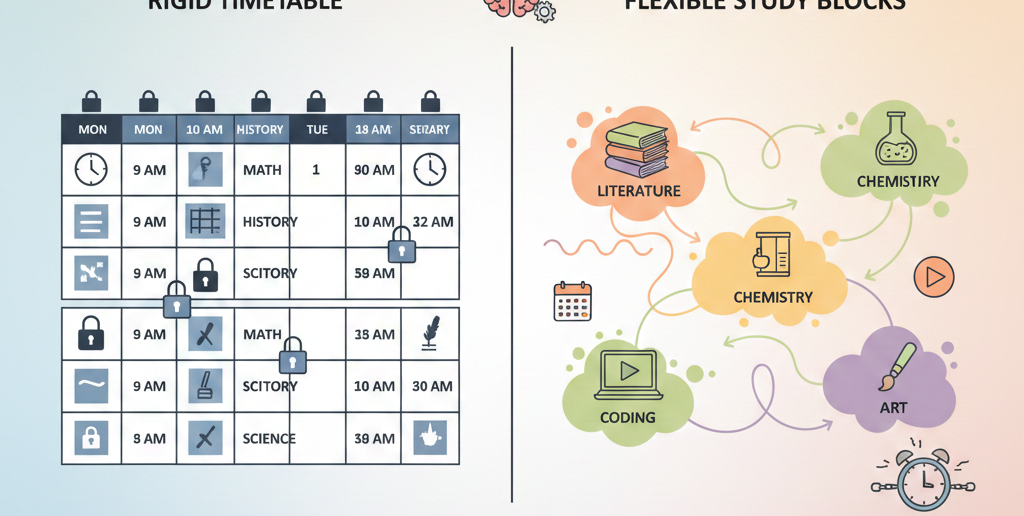
A working study routine has structure without rigidity.
Core Elements of a Good Routine
Fixed start cues
Flexible time blocks
Built-in review days
Buffer time for missed sessions

Step-by-Step: Build Your Own Study Routine for students
Step 1: Identify Your High-Energy Hours
Track when you feel most alert for 3–4 days.
Step 2: Match Subjects to Energy
High focus → difficult subjects
Low energy → revision or reading
Step 3: Use Time Blocks
Instead of exact times, use blocks like:
Morning block
Afternoon block
Evening block
[Pro-Tip]
Start with 2–3 study blocks per day. Consistency matters more than coverage.
Sample Flexible Study Routine
| Time Block | Activity |
| Morning | New topic (high focus) |
| Afternoon | Practice / numerical |
| Evening | Revision / recall |
This structure adapts easily if a session is missed.
Common Study Routine Mistakes
| Mistake | Why It Fails | Better Fix |
| Overloading days | Causes burnout | Fewer blocks |
| No revision time | Leads to forgetting | Weekly review |
| Same routine daily | Ignores fatigue | Subject rotation |
| No rest days | Mental exhaustion | Planned recovery |
Information Gain: Daily Routines vs Weekly Systems
Most top SERP pages push daily routines, but successful students think in weekly systems.
The Missing Insight:
Daily perfection is unrealistic
Weekly consistency matters more
Missed sessions should move, not disappear
This shift alone dramatically increases routine adherence.
UNIQUE SECTION — Beginner Mistake Most Students Make
Mistake: Trying to “fix everything” in one routine
Beginners often overload routines with all subjects at once. In practice, starting with just two core subjects per day builds momentum faster and reduces overwhelm.
[Money-Saving Recommendation]
Before buying planners or productivity apps, test your routine using a simple notebook for two weeks.
How to Adjust Your Routine for students When Life Gets Busy
Reduce blocks, not consistency
Switch to revision-only days
Maintain the habit cue (same start time)
A routine survives stress when it’s designed to bend.
Internal Linking Plan
Anchor: “best study methods for students”
Anchor: “how to concentrate while studying”
FAQ
Q1. How many hours should a student study daily?
Most students do well with 2–5 focused hours.
Q2. Should I study every day?
Yes, but intensity should vary.
Q3. Can a study routine be flexible?
Flexibility increases long-term success.
Q4. What if I miss a study day?
Resume immediately—don’t restart.
Q5. Is a morning or night routine better?
The best routine matches your energy levels.
Conclusion
A study routine succeeds when it fits reality, not when it looks impressive. By designing a flexible system that respects energy, limits, and life interruptions, students can maintain consistency without stress. A routine isn’t about control—it’s about support.


