
Introduction
Strong study habits are consistent and repeatable behaviors that make studying a natural part of daily life rather than a stressful task forced by deadlines. Instead of panic-driven learning, students with good study habits follow a steady routine.
When students develop effective study habits, they study more regularly, understand concepts more deeply, and retain information for longer periods. This consistency builds confidence and reduces exam pressure.
As a result, students feel less anxiety during exams and assessments, because their preparation is ongoing rather than rushed at the last moment.
Why Study Habits Matter More Than Talent
From real observation, students who perform consistently well are rarely the smartest—they are the most consistent.
The Difference Habits Make
Reduce decision fatigue
Lower resistance to starting
Improve long-term retention
Habits turn effort into routine, making progress predictable.
[Expert Warning]
Relying on motivation instead of habits leads to irregular studying and last-minute panic.

What Makes a Study Habit Stick
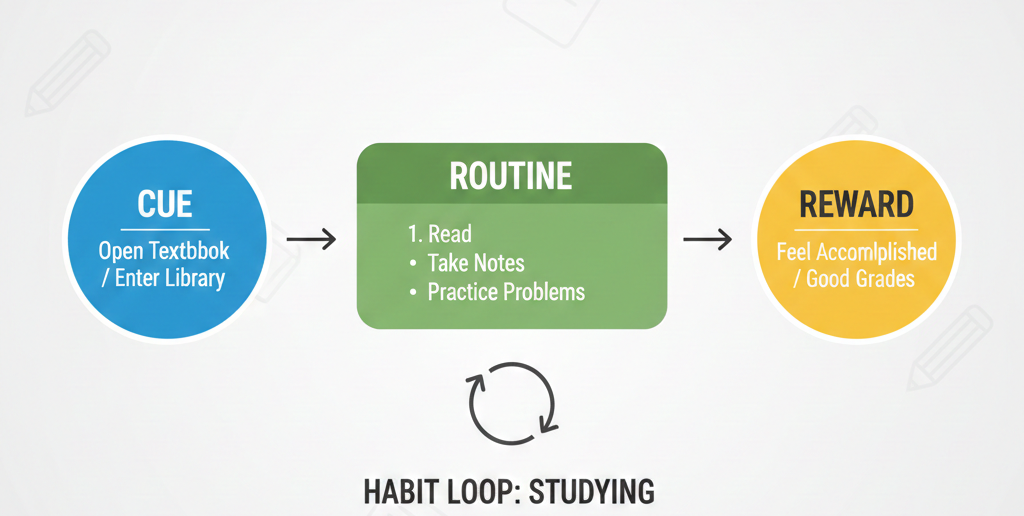
A habit forms when cue → action → reward repeats consistently.
Example:
Cue: Sitting at your study desk
Action: 30-minute focused session
Reward: Break, music, or satisfaction
Small actions repeated daily matter more than occasional long sessions.
Step-by-Step: Building Strong Study Habits
Step 1: Start Extremely Small
Begin with 20–30 minutes daily.
Step 2: Fix the Time or Trigger
Study at the same time or after a specific activity.
Step 3: Remove Friction
Keep books ready
Reduce phone access
Decide tasks before starting
[Pro-Tip]
Make starting easier than avoiding—it’s the fastest way to build habits.
Study Habits That Actually Work for Students
| Habit | Why It Works |
| Daily recall practice | Builds memory |
| Fixed study trigger | Reduces excuses |
| Weekly review | Prevents forgetting |
| Single-task focus | Improves clarity |
| Planned breaks | Avoids burnout |
These habits outperform irregular long study sessions.
Common Study Habit Mistakes
| Mistake | Why It Fails | Better Habit |
| Waiting for motivation | Inconsistent | Fixed study cue |
| Studying randomly | No progress | Clear daily goal |
| Overloading days | Burnout | Small daily sessions |
| Skipping reviews | Forgetting | Weekly revision |
Information Gain: Why Discipline Alone Doesn’t Work
Most SERP articles say “be disciplined” without explaining sustainability.
The Missing Insight:
Discipline works temporarily—but habits work permanently.
Students who rely on discipline often burn out. Habit-based systems reduce mental effort and make studying automatic.
This is why small habits outperform intense routines long-term.
UNIQUE SECTION — Practical Insight From Experience
In practical situations, students who attach studying to an existing habit—such as studying right after dinner or after morning tea—maintain consistency far better than those who rely on flexible timing.
[Money-Saving Recommendation]
You don’t need habit-tracking apps at first. A simple calendar with check marks is enough to build momentum.
How to Recover When Habits Break
Missed days are normal.
What to Do:
Resume immediately
Reduce session length
Focus on showing up
Habits are not broken by missing once—they break when you stop restarting.
Internal Linking Plan
Anchor: “study routine for students”
Anchor: “how to concentrate while studying”
FAQ
Q1. How long does it take to build study habits?
Most habits form within 2–4 weeks of consistency.
Q2. What are the best daily study habits?
Daily recall, fixed study time, and weekly reviews.
Q3. Can weak students build strong study habits?
Yes—habits matter more than ability.
Q4. Should I study every day?
Yes, but intensity should vary.
Q5. What if I lose consistency?
Restart immediately with shorter sessions.
Conclusion
Strong study habits transform studying from a struggle into a routine. By starting small, fixing cues, and focusing on consistency rather than intensity, students can study regularly without burnout. Habits don’t make studying harder—they make it automatic.


